Wednesday, May 9, 2012

La Citadelle Laferrière

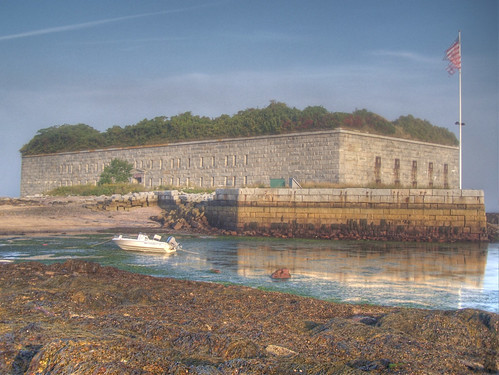
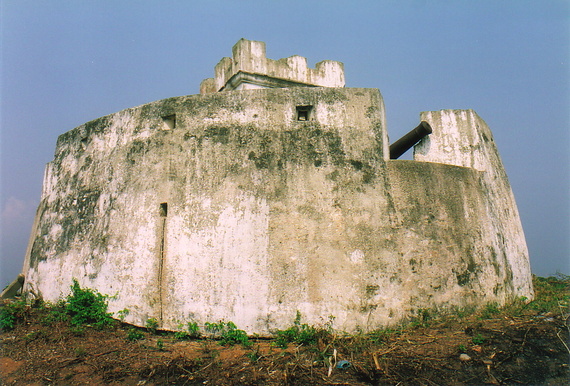
Okay, so let's talk about Haiti. Haiti has some old colonial coastal fort remnants from the French, but it also has something extremely unusual in the Carribbean; namely, an authentically autochthonic fort! By that I mean, this is NOT a fort built by Europeans, although it is perhaps not exactly a Native American fort either. Most importantly, it is totally badass. 

Haiti fought a successful war of independence, shrugged off the colonial yoke of imperialism, and declared a free democratic republic not long after the United States did, and about 150 years before any of their Caribbean neighbors (many of which even now owe fealty to European crowns). In gaining their independence, these freedom-loving Haitians provided an instructive object lesson in the capacity of large numbers of pissed-off slaves to kill Whitey and take over the country. This made slaveowners everywhere else extremely nervous for some time after, and explains why the Haitian Revolution was so poorly publicized despite being such a fascinating subject.

Anyway, after winning the war, Haiti didn't do as good a job of maintaining a stable government, perhaps, as the United States. There were many external enemies to a free black Carribean nation. Additionally, having developed a talent for armed insurrection, Haitians were loathe to give it up as a pastime. Since the first revolution in 1791, Haiti has experienced no fewer than 32 intramural coups de main, most recently in 2004. So it has long behove Haitian rulers to consider their defensive strategy wisely. Voilà La Citadelle Laferrière!
La Citadelle was the product of Henri Cristophe, one of the founding fathers of the Haitian Revolution. Born a slave, he earned his freedom and (reputedly) fought in the American Revolution before joining up with Toussaint L'Ouverture and rising to the rank of general in the Haitian Revolution. After all* the whites were dead and Haiti was free, Henri Cristophe found himself unsuited to the tumultuous postwar political environment despite his high rank. He excused himself from the democratic experiment of the Republic of Haiti and retired to the north with his army to crown himself King of Haiti. The Republic and Kingdom coexisted for the next 10 years, both claiming sovereignty over the entire island but never seriously contesting it.

As H.R.M. Dei Gratia Rex Haitius, Henri established a peerage and insisted on the full honors of royalty. Although non-French Europeans found his monarchic affectations to be buffoonish, they tolerated him. More importantly, they traded with him, unlike his anti-Royalist Southern Haitian neighbors. As the royal coffers swelled, Henri began an ambitious building program. The mountaintip fastness of La Citadelle Laferrier was swiftly constructed along with several opulent palaces, using, *ahem*, forced... one might even say, slave, *cough* labor from his subjects. Well, needs must, when the Devil drives.


Brutal, oppressive, and grandiose he may have been, but King Henri was no fool. He figured the French would probably come back someday, so he used his trade credit from selling sugarcane to France's enemies to load La Citadelle pour l'ours. It was stoutly built, armed with over 300 cannons, and provisioned for a long siege; the tremendous stockpile of cannonballs Henri laid in is still cluttering up the joint. Had the French invaded, Henri's national defense plan was to torch the countryside and turtle up in the fort until the invaders died off from malaria, or yellow fever, or typhus, or some other damned thing - about six months, in other words. It seems that La Citadelle constituted an effective deterrent, because a French invasion never came. Indeed, the greatest threat to the crown proved to be King Henri himself. As the story goes, he shot himself with a silver bullet following a debilitating stroke. His only son, Henri II, was promptly assassinated by disgruntled cadre. The Kingdom was quietly assimilated into the Republic of Haiti, of which, in the fullness of time, King Henry's grandson was elected President in 1902.


Anyway, the fort is totally gorgeous and worth the visit if you can swing it. Right, now the tricky part comes, visiting the place. Apparently Northern Haiti is supposed to be relatively chill, compared to the rest of Haiti, but remember that's relative. The cholera epidemic has calmed down, but, you know, get your shots.  

If you're black, you're set to visit without too many problems; just don't flash too much money or steal anybody's girl. If you're a honky like me, we-ell... Haitian racial relations with whites have been strained ever since the Great Frog-Stab of 1791-1804 (*the only amelanic survivors of which belonged to 3 small groups: a contingent of Polish soldiers serving under the French who surrendered in exchange for asylum and citizenship; a cluster of extremely chill Germans living so far off in the sticks that no one remembered they were there in time to murder them before peace was declared; and a medical mission). If you are French, I advise that you pretend to be from Quebec. Racial relations with Hispanics have been strained ever since some atrocious massacres of Dominican children and Catholic priests and nuns and burnings of churches and monasteries occurred during a punitive raid into the DR by King Henri in 1805. One of those 'He started it!' things, I guess. Asians, Arabs, Australians, I have no idea...you're probably fine. Haitians tend to drop their aitches anyway, so attempt to accentuate the alliteration angle.  

Whoever you are, this is where you want to be when the zombie apocalypse occurs. In an impregnable fortress on top of a mountain in the middle of a tropical jungle on an island in the middle of the ocean.

Tuesday, July 14, 2009

Key West: East Martello

Okay, so if you've been keeping up with this blog, you'll know that Fort Taylor kept me busy for one afternoon of my boring long weekend last winter in Key West. But I had more time to kill, and I was still bored! So it occurred to me; Key West is a pretty big island. Fort Taylor only covers the southern and western approaches; what if attackers landed elsewhere on the island and took the fort from behind (conducting, as lupine premeds refer to certain similar organic chemical SN2 reactions, a 'rear attack')? Clearly, Fort Taylor was not the only fort on this island.

Now that it's time* for this story to finally be told, check out the minifort on the opposite side of the island!

*Emily Elert's birthday. Happy birthday Emily!


View Larger Map

This thing is known as the 'East Martello', for a couple of reasons. It's 'east' because it's on the east side of the island (which is fine, I guess), and it's a 'martello' because people are stupid. Doubtless this revelation comes as a great shock- permit me to expound, with a...

Brief Digression on Historical Trends in Inexpensive Coastal Fort Designs

As you can imagine, forts are expensive. Building a serious military-grade piece of architecture takes a lot of time and money that is probably better spent on improving your domestic beef infrastructure. As a result, people across the world were always interested in the prospect of getting more bang-proof fort for less buck. In the 1500s, the Genovese fortified the island of Corsica with a bunch of little round towers that were much like Hobbes' view of life in mankind's natural state:


videlicet, solitary, poor, nasty, brutish, and short. However, these towers were also strong as the Dickens. The archetypal Martello fort (pictured above) is located at Mortella Point in Corsica ('mortella' translates as 'myrtle', by the by). It is in remarkably good shape considering it is half a millennia old. It is even more remarkable when you consider that during the 1794 Corsican campaign, it held out against two British men o' war (Fortitude, 74, and Juno, 32) and their marines for two days with only two casualties out of a garrison of 33. This was basically unprecedented and it so shocked Lord Hood, the commanding British admiral, that he talked everyone's ear off about it and incidentally introduced a misspelling that has persisted to this day. Pretty soon the entire British Empire adopted the design for strategic coastal defense and that led to most other countries copying the design themselves.


The basic idea of a Martello is pretty simple: round, with thick walls and a few guns on top mounted to shoot over the top of the wall (this is called a 'barbette' mounting, which sounds like a Mattel optional accessory, but there ya go). You'll notice that the Officer's Quarters and the Men's Quarters are the same size in the diagram above. Standard complement was 1 officer and 24 men.
Hm. You'll also notice the parapet is set up to collect rainwater, obviating the need for an external supply. There is only one small door, which is set halfway up the side so you can pull the ladder up after you. All in all, a very efficient design.

Finis

Well, obviously, once I had got into all this history, it became apparent to me that Key West's East Martello was fundamentally misnamed. Yes, it did have a large tower in the center, but it was square, and had thin walls striped with loopholes that would not have stood up to a determined bombardment.


To make matters worse, this incorrect tower was surrounded by a perfectly normal tier of heavy cannon mounted in casemates (meaning the cannon fired out of holes in a wall instead of over the top of it). You can see the fort's layout below:

Notice they're calling the central tower a 'citadel', which, come on guys, is getting a little carried away. This thing was so poorly constructed that the weight of the cannon eventually caused the roof of the tower to collapse. Gravity! The one foe they didn't count on having to face! Anyway, here's a shot of the outer wall.


You've doubtless noticed those thick cast-iron 'throats' set into each gunport- designed by an American general name of Totten, these were intended to reinforce these weak points (which were, after all, holes in the wall) and allow metal shutters to be installed to protect the gun crews from snipers while they were reloading. This was a big deal back in the 1850s. Totten was kind of a baller. Remember that name.

Anyway, I'm sure there is a word for this type of fort but 'martello' definitely ain't it. Don't worry- I already fixed the Wikipedia entry. I recommend you bring your relative who is really into building paper models to this fort so they can later find this hot little number and send it to you:

Adorable!

Saturday, April 18, 2009

The Netherlands

All of the Netherlands is one big fort. Let's look at why.

One of the many interesting things about the Dutch is their fascination with canals. Now mind you, back in the day, pretty much everybody in Europe was into canal building, at least socially. You know how it is; you're at a party, someone starts passing around plans for excavator differentials- pretty soon there are all these scruffy guys tearing up the shrubberies and your populace doesn't cotton to it. Holland, however, developed a raging canal dependency that persists to this day. It's easy to understand why: canals were an easy way to move things, people, and water to exactly where they were needed. The canals and dikes were built at first to drain a lot of acreage, increasing agricultural output. As a side effect, the Dutch also got a tremendous strategic defensive advantage, since they could simply flood any territory occupied by enemy troops, and then sail in on canal boats to pick off the floaters. This crude but effective area denial weapons system made the heartlands of Holland pretty much immune to invasion.

Not only was the whole country fortified in this manner, most cities were as well, usually with a modern system of defenses behind a big deep canal. Check out Naarden, for example:


View Larger Map

And here's Zwolle, another cute one:


View Larger Map

And lastly, the incomparably adorable Heusden:


View Larger Map

Niiiice. You remember me blithering earlier about interlocking fields of fire? This is Vabaun a l'aqua. Not easy nuts to crack- and notice they put their churches right in the middle! Very orderly planners, the Dutch. Amsterdam was pretty much the same idea on a bigger, and coastal scale; c
heck out the concentric canals, and thus, lines of defence:


Each of those little protrusions on the outer walls had its own windmill and battery of guns. Of the two, the windmills were probably the more formidable- these were big, military-grade mamas that were used to drain or drown the surrounding terrain. Check out the zoom-in:

This system of defenses worked like a charm until the mid-1900s. The canal defenses held against the panzers and stormtroopers- but they proved wholly ineffective in protecting Rotterdam against saturation bombing:

Faced with this display of firepower, 'Fortess Holland' capitulated, leaving Hitler free to finish off France at his leisure and giving Americans an object lesson on how to force surrender out of a stubborn populace. The Netherlands is a good place to bring your fat stoner friend (not me- I'm way too skinny). Stoner so they'll have fun at the coffeeshops, and fat so that when they fall into the canals while stoned they'll float more easily.

Friday, January 9, 2009

Fort Taylor

Recently, I had occasion to visit a fort that was new to me. Over the holidays, I spent some time in Key West, which is a fancy place frequented by lots of rich people who like to shop and be fabulous. Whatever. I had resigned myself to a long weekend of poring over the footnotes for Infinite Jest on the beach, when all of a sudden, it hit me: as the U.S.'s southernmost geographical point, Key West has strategic value! Somebody must have built a fort here at some point!

Sure enough, check out Fort Zachary Taylor's sweet fuckin' business:


View Larger Map


Fort Taylor turned out to be a vacation goldmine. It was built at about the same time as forts Pulaski and Gorges (see previous posts) but, like Gorges, it took a while to be finished, meaning that it is now time for:

A Brief Digression on Trends in Historical
American Coastal Fort Construction:


Americans take roughly as long to finish their forts as Europeans take to finish their cathedrals. This is because forts don't really need to be completely finished in order to work (I refer you to Palpatine's 'fully operational' line in Return of the Jedi). In the 1800s all coastal forts were designed to have several tiers (or as civilians call them, 'floors') of guns. This was convenient, since it was a modular design. Once the first tiers were built, guns were installed; this generally so relieved people that they celebrated by taking a break from fort-building for a few decades. Every generation or so, some asshole king in Europe would get all stroppy, war would brew, and everyone would run around and built more tiers on their forts. Over the lifetime of a fort (more than a hundred years in this and other cases), advances in siegecraft meant drastic redesigns became necessary if the fort was to remain in effective service. Thus, forts were often built and rebuilt several times, leading to interesting architectural contrasts.

Finis

Fort Taylor was conceived as a small trapezoidal battery of large smoothbore cannon. At the time of its initial construction (1845), warships were still made of wood, so seacoast forts were designed to fire hot shot. Similar to smack cut with arsenic, hot shot is bad news. The idea was to heat cannonballs red-hot in a furnace before they were loaded and fired at ships, so they would set the (wooden) ship afire when they hit home. Hot shot was also a one-way street; shot furnaces weren't safe aboard ship and anyway, it's pretty hard to set fire to a brick or stone fort in the first place. To get the best range with hot shot, you want to fire them on a relatively flat trajectory so they will skip over the water and hit the hull dead-on so they penetrate (thus hot shot was only fired from the lowest tier of guns). After being heated in the big furnace, the hot shots were carried by small children to the gun emplacements on the first tier, which each had a cute little mini-furnace to keep the hot shot searing until it was needed. During half-time, they made for pretty good hibachis to cook fish the gun crew would catch from the moat out of the gun port.


So, in re: the picture above, I couldn't help but notice you appreciating the brickwork. 'Damn,' I heard you muttering to yourself. 'That's some good-ass brickwork!' Well, sir or ma'am, all I can say is that you have an eye for fine brickwork. I'm glad you brought it up, because this brings us to:

A Brief Digression on Trends in Historical
American Coastal Fort Construction Workers:


There is a problem. Americans don't know how to build forts. They're more into the like log-cabin shtick. Slabs and vaults, those groovy parabolic arches: a little out of their league. So to build their forts, America imported gangs of masons from Europe (this was occasionally a contributing factor in pissing off asshole kings). These guys were cathedral-trained pros who mostly didn't speak English and had peculiar cuisines. Kept to zemzelves and no you can't have any soup. The Army roughed out the location, put up some string to show where to build the walls, and then let the swarthy soup-eaters have at it. This explains some of the interesting architectural choices you see , particularly in some parts of the ceiling:


My mother, a veteran of many construction sites, immediately identified this architectural phenomenon as "the foreman wasn't looking so they just kludged it together." This sort of excitable overvaulting is what happens when consummate contractors meet incompetent engineers.

Finis


Anyway, all that brick stuff is the north side of the fort (on the right in the picture above). The south side of the fort was modernized in the 20th century to defend against (surprise!) asshole European dictators. The gunports were bricked up and a hardened concrete gun battery was put in on top of the old wall.


The best part is that when the fort was modernized the old cannons were scrapped; 60 years late and out of date, son! Instead of melting them down, however, the cannons were mixed in with the concrete of the new fortifications, kind of like giant hunks of rebar. In the picture below, you can see a couple of 15-inch smoothbore Rodmans partially excavated
in situ, weight approx 49,909 lb. ea.


Anyway, what with reading all the signs, skipping stones in the moat, and climbing up onto the parts of the fort that you're not supposed to climb up on to, Fort Taylor kept me pleasurably occupied for an afternoon.You should visit it if you ever end up in Key West by accident or on purpose. I recommend you bring a good kite to this fort because if you go out on the beach (killing field) you can catch this beautifully stiff breeze coming in off the Gulf. Kitestring for miles if you got it.


Monday, December 15, 2008

Fort Gorges

Today's fort is in Maine. As you know, no one lives in or cares about Maine (Ha ha! In fact, two of my three readers are from Maine; figure that one out if you can). During the Civil War, the Union decided to build a fort to protect Portland, a strategically crucial maple syrup port. Fort Gorges was built on a tiny island in the mouth of the harbor. Its design is pretty similar to Fort Pulaski (see first post), except for being built out of granite instead of brick.


View Larger Map

Anyway, although this fort was obsolete before it was finished (rifled artillery and high explosives, alas, the death knells of so many of these beautiful American coastal forts), it turned out that the Confederate Navy was more interested in smuggling cotton to Europe and so the fort never fired a shot in anger. The half-finished fort was half-heartedly maintained until WW2, when it was finished somewhat further and used to store naval mines. Since then it has been abandoned and overgrown.


Since you're in a boat anyway, you might as well also check out another island fort right next door. In the 20th century, another set of more modern earthworks was constructed on another island just south of Fort Gorges to actually defend the harbor against Nazis and maple syrup raiders. The guns are gone, but you can still zoom in to see the emplacements; the semi-circular looking things are where the guns were mounted so they could traverse. Each emplacement is surrounded by a berm of earth so that if one gun took a hit, the resulting explosion wouldn't knock out its neighbors. It's the same way they build fireworks factories.


View Larger Map

What else about Fort Gorges? Let's see... there are no tours, you enter at your own risk, private boat, don't climb on the sod, don't set fires directly on the granite, yada yada yada. The National Park Service recommends that you bring a flashlight to Fort Gorges if you wish to explore the powder magazines on the first floor.

Of course you wish to explore the powder magazines on the first floor!

Saturday, November 22, 2008

HM Fort Roughs


I have been saving this fort for a special occasion*, so here it is. Today's fort is a WW2 British sea fort. It was constructed in the Thames, christened H.M. Sea Fort Roughs, and deployed (sank) on a sandbar in the English Channel in 1943.
*Karen Casgrain's 26th birthday. Happy birthday Karen!

The fort was never designed to withstand a naval assault; it was strictly an antiaircraft gun platform. Its mission was to pick off German bombers trying to mine the Essex sea lane. The big tubes that support it are hollow; each has seven floors' worth of big cylindrical rooms for quart
ers, stores, generators, and at the very bottom, the magazines. Since it was a sea fort, it was manned by 250 Royal Navy sailors. (Sailors in a fort! It's like ducks manning a bathtub!). The platform on top of the fort was for the guns and radio. Fort Roughs was actually one of four such forts built. Check out the installation (controlled scuttling) process by clicking on the picture below!


After the war was over, the Navy abandoned the forts. Since they were huge, concrete, and had already been sunk, there wasn't much the elements could do to it (although one did blow over in a storm in 1997). After the war, the sea forts became very popular with pirate radio b
roadcasters seeking to circumvent British bandwidth licensing fees. Major Patrick Roy Bates, R.A. (ret.), seen below, started squatting at Fort Roughs in 1966. In 1967 he realized that he was in international waters, and he subsequently declared the fort an independent sovereign nation: the Principality of Sealand.


Although Sealand never got much diplomatic recognition from any more traditional countries, neither did His Royal Highness Prince Roy get evicted; turns out no one really cared what some nutjob did on an old fort out in the ocean. The Royal Navy did try to kick him out in 1968 but he wisely shot at the swabbies and got himself arrested (when in doubt, always get arrested!). A British court dismissed the charges and ruled that Sealand (and, by extension, its population) was in international waters and thus not under British rule nor subject to British law.  This effectively relinquished all claim, leaving Sealand de jure independent.


Prince Roy got serious, wrote up a constitution and issued passports, coins and stamps. Pretty soon he attracted settlers, who were mostly excited at the prospect of being able to mail letters from one side of the fort to their friends on the other side of the fort. A fair number of people ended up as Sealand citizens, most of whom are dual-citizen expats living outside of Sealand. Every so often, Sealand sends teams to compete in various international sporting events. They have a very good marathon runner they are attempting to get into the Olympics.
Let's see, what else... a German-Sealandian citizen tried to stage a coup de main in the late 70's - very exciting, mercenaries, lots of shooting, helicopter assaults, etc. The coup failed, and the ringleader (previously the Prime Minister of Sealand and thus a traitor rather than a POW) was imprisoned at the fort until he paid a hefty fine. The German government decided this sounded a lot like one of their nationals being held for ransom by criminals, and there was a bit of a hostage situation for a while. Lately, Prince Roy rules
in absentia from a nursing home in Spain, while his son and heir apparent Prince Michael governs as regent. Sealand was successfully monetized in 2000, when a company named Havenco began operating a cryptographic data haven in the fort - pirate radio's modern descendant. The idea is that paranoid people can securely store their data there and government spooks cannot look at it.

Elephant in the room
; some of the encrypted data in the Sealand servers almost certainly is child porn
. By the same logic, however, some of it almost certainly is not. So that's comforting.

Currently, they are also working on an online casino business.

Sealand is not too easy to visit. It is about 7 miles from the English coast, in the middle of the North Sea, so you're gonna need a boat or a helicopter or something. Because of the nature of the highly-sensitive encrypted data they are sitting on, Sealand's border patrol (teenager with a rifle) is very security-conscious and won't let random people in off the street (ocean); try writing ahead of time and asking nicely (
Bureau of Internal Affairs, SEALAND 1001, Sealand Post Bag, IP11 9SZ, UK). This is a good fort to bring a sweater to because the North Sea is cold as bejesus and the dickens combined.

Monday, October 13, 2008

Cape Coast Castle


Today's fort is kind of intense. It's in Ghana, and it has kind of slave-y history. There are several pretty good forts on the Ghanaian coast, actually, but this one is probably the best-preserved. I was not aware of this, but apparently Scandinavian countries also had a thumb in the Africa pie, because Cape Coast Castle was originally a wooden fort named 'Carolusborg', built for the Sweidsh government by Henry Caerlof, a Swiss sea captain, in 1653. Swedes in Africa? Whaaat.


View Larger Map

Apparently Caerlof wasn't really providing a top quality product to his Swedish masters, because Carolusborg was captured by the Danes in 1657. The Danes too! I know! It's pretty weird, but remember; this was the 17th century. The bottom didn't fall out of the international salted codfish market until 1662, so the Hanseatic Leaguers still had some juice left. The English captured the fort and by extension, Ghana, in 1664, and got down to some serious slave trading until they knocked that shit off in 1807. This castle had some amazing throughput; at any time there were about 1500 people hanging out in the castle's basement waiting to be sold and loaded onto slave ships
. Bummer! The castle did snag a UN World Heritage Site listing out of the deal, though. The castle looks pretty good and there are also two little auxiliary look-out forts on either flank that are as cute as buttons.


The town of Cape Coast is really into crabs. It is even the town's symbol. So I would recommend you bring my grandma to this fort because, bless her soul, that woman loves her the shit out of some crabs. Also bring some crab bibs.

Thursday, September 11, 2008

The Lochnagar Crater

This is not technically a fort per se, but I guess it falls under the category of 'improvised earthworks'. Way back in WW1, the Brits tried to blast their way through the Boche lines in Northern France with a brace of 24-ton subterranean mines (dubbed the 'Lochnagar' and the 'Y-Sap'). Witnesses reported that the explosion kicked up a plume of dirt 4000 feet into the "repercussing air". As you might expect, huge craters resulted, one of which (Lochnagar's handiwork) has been preserved as a monument.


View Larger Map

Northern France has crappy Google resolution, but here's another image from Wikipedia that gives you a sense of the scale of this thing. Those little things clustered around the cross on the far rim are people getting their tourisme on. You can also see the trails where the local kids ride their bikes - wheeeee!

Anyway, after the Lochnagar and the Y-Sap went off, the Brits went over the top and pushed into no-man's-land. The Krauts were shook up enough that their counterattack was slow, so the Brits made some progress at first. Eventually things got a little hairy, at which point
a batallion of doughboys (named even in official correspondence as "Grimsby's Chums" because they all went to the same twitwad boarding school in Yorkshire) jumped into the Lochnagar Crater while trying to avoid the many, many maschinengewehrs being fired at them. Apparently they also got shelled a little bit by their own artillery by accident, but in fairness, this thing is total fusilier-bait.

I would suggest you bring your British friend who went to a
twitwad boarding school (mine is named Henry), but it seems the Grimsby's Chums suffered 83% casualties on that day so it might be kind of a downer. Instead I would bring a medium-sized retriever or a sheepdog that would just run the heck all around in the crater and have the best time ever.

Wednesday, June 18, 2008

Krak des Chevaliers

Okay, so this one is a bit of a schlep, but it's worth it. Krak des Chevaliers is basically almost a thousand years old (minus 23 years), and was the theater HQ for the Knights Hospitaller during all the Crusades. It is in kind of amazing shape, considering. It features tons of different architectural styles of all flavors and could probably still hold off a modern horde of infantry as long as they lacked artillery or air support. I am not including the usual Google map because Google doesn't have imagery of Syria at any useful level.

The Krak features a commanding view of the surrounding territory, curtain walls, an
interior moat, its own aqueduct, and a perfectly delightful cafe in what used to be the keep. This is not a good place to bring a Frank or a Mussulman, because either would be offended by what was done to the chapel over the years as the Krak traded hands back and forth. Kind of a Hagia Sophia type situation. Maybe bring a Jew, then?

*TRAVEL ADVISORY WARNING* It is not recommended to bring a Jew to Syria; they may be confiscated at the border. Bring a Hindoo instead.

Tuesday, March 11, 2008

Kronborg Castle


Denmark’s Kronborg Castle is probably better known as Hamlet’s Elsinore. It is a very attractive piece of military architecture, featuring a main Renaissance-era castle and a fierce set of curtain walls built in the late 1600s with geometrically-interlocking fields of fire that made it the most impregnable fortress in the world at the time. The grounds are gorgeous and the view across the channel to Sweden is expansive on a clear day.


View Larger Map

This is a good fort to visit with a beautiful girl. It is a very romantic place, lots of plants and a beach and as long as it is a nice day there will be a cheerful vibe and thus a decent chance of Doing It later on.

Wednesday, February 27, 2008

El Castillo San Felipe Del Morro

This fort is also known as 'El Morro', and it is a pretty sweet fort in San Juan, Puerto Rico. Spanish-built in the 1600s and actively garrisoned up until the mid-1900s, it saw plenty of service and even fired the first U.S. shot of WW1 (at an unarmed freighter, but still).


View Larger Map

El Morro features an expansively beautiful front lawn (killing field) and an excitingly chunky design style. Because it operated continuously for so long, you can see the evolution of design from a tiny outpost to a bulky fortress. During WW2 an armored fire control station was added to run harbor defenses from.  


It has some cute cupolas that are one of the national symbols of Puerto Rico. It is considered good form to have your picture taken while peeping out of one.


It is an okay place to bring a small child but there are no crocodiles or guns so they will get bored fast. A safer bet is to bring old people to this fort because they will like the front lawn (killing field). It will remind them of History and they will tell you a Story about History.

Saturday, February 23, 2008

Fort Pulaski

There are odd little conversations that you can get into in public places with complete strangers. I have these a lot, particularly in airports. When you're flying nowadays, there is a lot of waiting in lines and a lot of sitting around, stuck with a group of people. When you’re in the company of people that long, you tend to seek allies. It’s an instinctual social thing.

At Miami International, the line to the security checkpoints is a very fungible thing, with tendrils snaking off everywhere. The guy behind me and I trivially commented on how we couldn’t tell where the line was. This was an international airport, after all. You’d think they could put up some ropes? Turns out we were from opposite ends of Georgia. I remarked on Fort Pulaski and he remarked on the efficiency of Atlanta’s airport. Then we drifted apart. In that time, we acted like friends, helping each other to move efficiently through the crowd and getting up to the checkpoint. Talking about this fort helped me make my flight.


View Larger Map

Anyhow, this is Fort Pulaski, located in the middle of Savannah harbor: it is a mid-1800s U.S. fort built according to the latest thinking on forts at the time. It was finished in 1847 and the Confederates took it over no problem. However, its design proved obsolete when Union troops were able to demolish it from a safe distance using rifled artillery. It was swiftly decommissioned postwar.

The pentagonal red brick fort features an attractive triangular demilune behind the fort as well as a moat with crocodiles in it. Sometimes there are 4-pounder cannon demonstrations. It is the ideal place to bring a small dorky child.